Gifting
Buying a signed shirt as a gift
Choosing well for someone whose sport you do not follow, and getting it there in time.
Gifting
Choosing well for someone whose sport you do not follow, and getting it there in time.
Key takeaways
Most people buying signed memorabilia as a gift do not follow the sport themselves. They know one thing: that the person receiving it cares a great deal about a particular club, driver or player. That is enough to work with, and it is far more than most sellers will ask you for.
What follows is the order we would work through it in, and the questions worth settling before you spend anything.
Who they support. The club, the driver, the team. If you are not certain, the safest signal is what they already own: a shirt in the wardrobe, a flag in the garage, the team they mention when a result goes against them.
What you want to spend. A range is enough. Authenticated memorabilia starts a great deal lower than most people assume, and knowing the band stops you being shown things that were never realistic.
With those two, a shortlist of three is a ten minute job. Without them, you are browsing two hundred items with no way to choose between them.
A player can disappoint. A club rarely does. Loyalties to individuals shift, and a falling out, a transfer or a bad season can sour a name. The badge outlives all of that.
If you do know the player, choose the era. The shirt from the season they grew up watching will almost always land harder than the current one. People are not buying the player, they are buying a period of their own life.
Beware the obvious pick. The most famous name is not always the most meaningful one. The cult player who defined a decade for that fan often means more than the superstar everybody else would have chosen.
A gift has a deadline, and missing it is worse than choosing the wrong piece. Confirm the date it will arrive before you confirm what you are buying, not after.
Framing adds time. Anything finished to hang takes longer than something boxed. If it is for a particular day, say so at the start rather than discovering the problem at the end.
Ask what happens if it slips. A seller who has thought about this will tell you straight away. One who has not will tell you it will be fine.
A shirt folded into a mailer does not read as a serious gift, whatever it cost. The moment of handing it over is most of what the recipient will remember, and a flat plastic envelope undoes a great deal of money.
Boxed is the minimum. Protected, presented, and possible to hand over as it is.
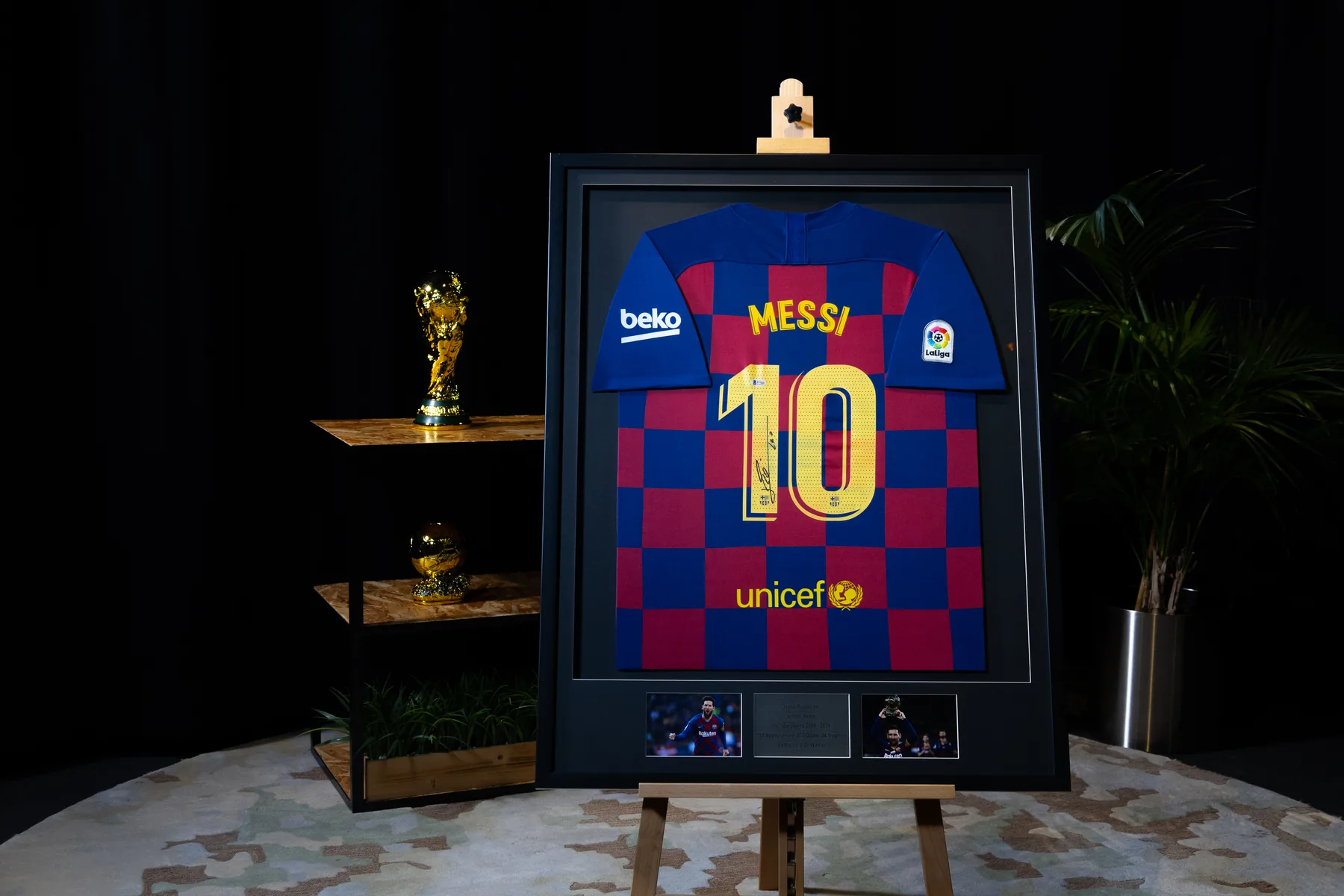
Framed changes it entirely. A framed piece goes on a wall that week rather than into a drawer until they get round to it. It costs more and it takes longer, and it is usually the difference between a good gift and one they talk about.
The certificate is part of the gift. Not an administrative afterthought. It is the thing that lets them show somebody else that the piece is real, and it is what makes the signature mean something beyond ink on fabric.
Keep a record of the number. If the piece is ever insured, valued or sold on, that reference is what the conversation starts from.
Tell us the club, the occasion and the budget, and we will come back with three options that fit, with the delivery date confirmed before you commit to any of them. You do not need to know anything about the sport to get this right.